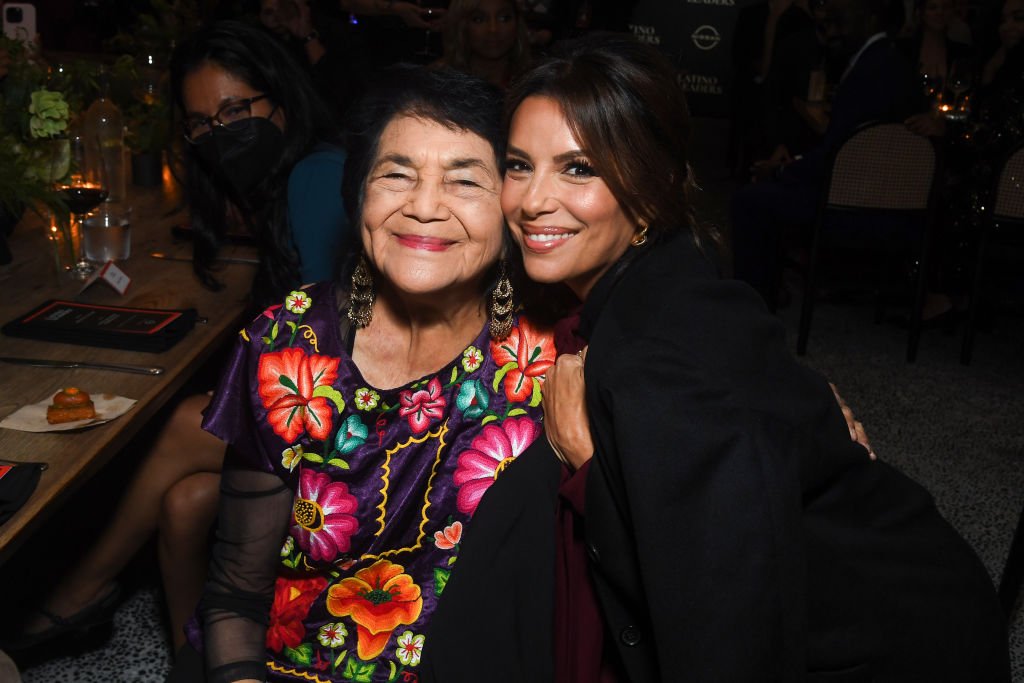
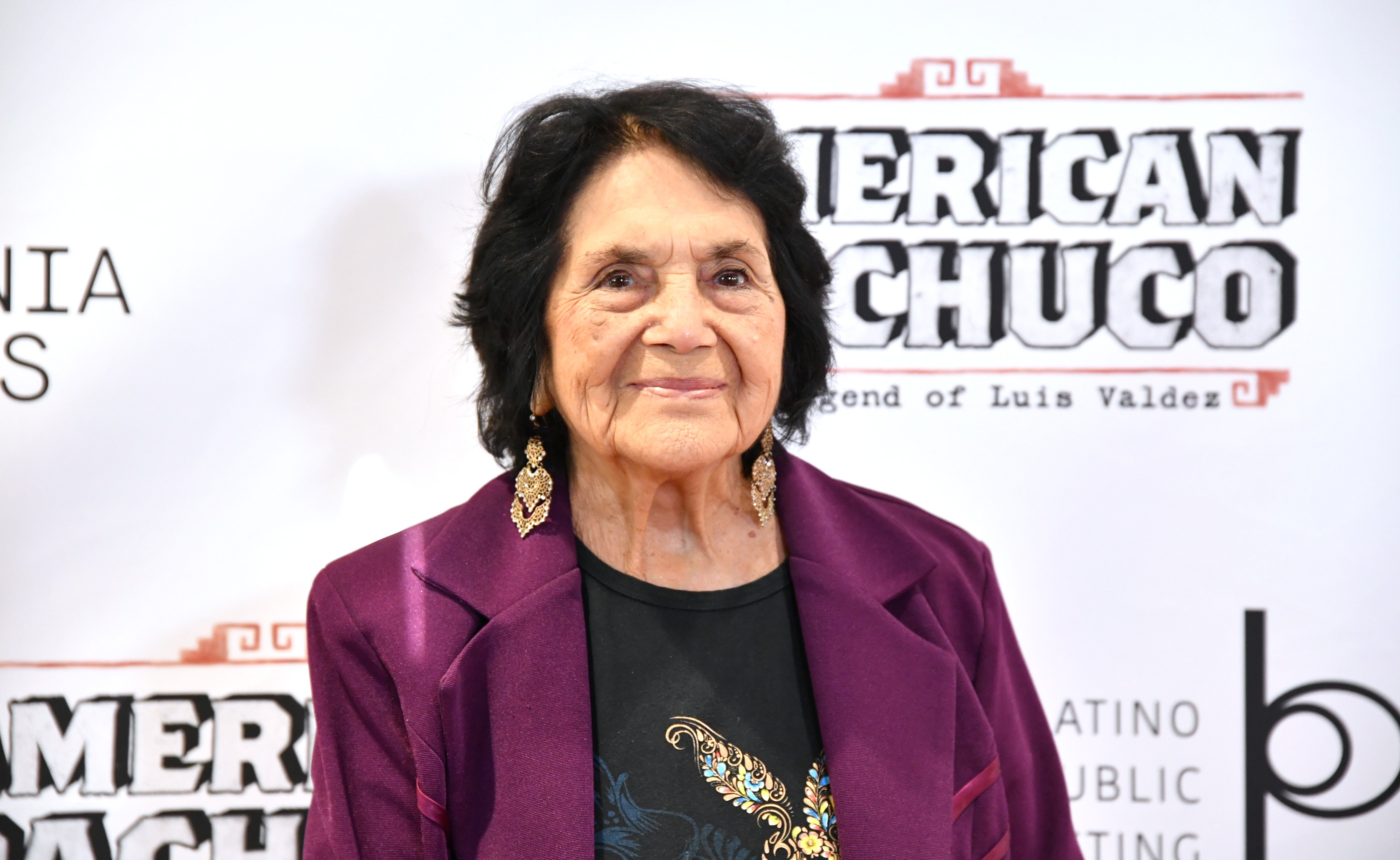
After Dolores Huerta, a civil rights icon, died at her daughter’s home in Bakersfield Wednesday, one of her friends described to NBC Los Angeles Huerta’s “powerful” and “moving” final days surrounded by her loved ones.
Gregory Nava, the award-winning director behind movies like “Selena” and “Frida,” said he witnessed her passing. He and his wife, who have been close to Huerta for decades, had planned on visiting her before her health quickly declined, according to Nava.
“It was an unbelievable, powerful, moving and overwhelming experience to be with her on her last day with the family — and spending time with her and saying our goodbye,” Nava said.
Huerta’s family said she died of cancer Wednesday morning, surrounded by loved ones.
Nava said Huerta seemed like her old self a few days prior to her death, but her health rapidly took a turn. During her last hours, Huerta seemed at peace, according to Nava.
“We played music for her. When we played the song ‘Recolores,’ which was the anthem of the farmworker movement, that just affected her in a very powerful way because it summarized everything in that song that she went through,” he said. “It’s almost impossible for us to imagine what that woman went through and survived.”
Nava said he and Huerta discussed making a movie about her life, but the civil rights leader had one specific suggestion.
“When I asked, ‘What do you want the story of your life to be about?’ She said — typical Dolores — ‘I don’t want it to be about me,'” Nava recalled. “She said, ‘I want the story of my life to inspire a new generation of activists who fight for justice.'”
Nava said he now plans to finish the movie about Huerta’s life and career to “keep her light in the world.”
“What she accomplished was unbelievable, and now it’s up to the new generation, to us, to carry her torch into the future.”
On a personal level, Huerta loved life and loved to have fun, particularly through Mexican music and flamenco, the filmmaker friend said.
“I would take her to the opera a lot, and we would always enjoy doing that,” Nava explained, saying Huerta loved going to shows.
Another friend, who had lived a few doors down from Huerta for more than a decade, said it was normal to see her around.
“I checked my morning news and saw that she had passed away, and I was shocked. I didn’t even know she was sick,” Hector Hernandez said.
Dolores Clara Fernández was born April 10, 1930, in Dawson, New Mexico, and moved to Stockton, California, at age 3 with her mother after her parents divorced.
Witnessing racism against Latino Americans from early on inspired her toward activism. The National Women’s History Museum lists two significant events she witnessed as a child: when a prejudiced schoolteacher accused her of cheating because her papers were too well-written and, in 1945, at the end of World War II, when white men brutally beat her brother for wearing a popular Latino fashion, the zoot suit.
She took up her last name after marrying her second husband and fellow activist Ventura Huerta.
She received an associate teaching degree from the University of the Pacific’s Delta College and briefly taught school in the 1950s. Working with hungry farm children coming to school motivated her to organize farmers and farmworkers.
City News Service contributed to this report.
This story uses functionality that may not work in our app. Click here to open the story in your web browser.