
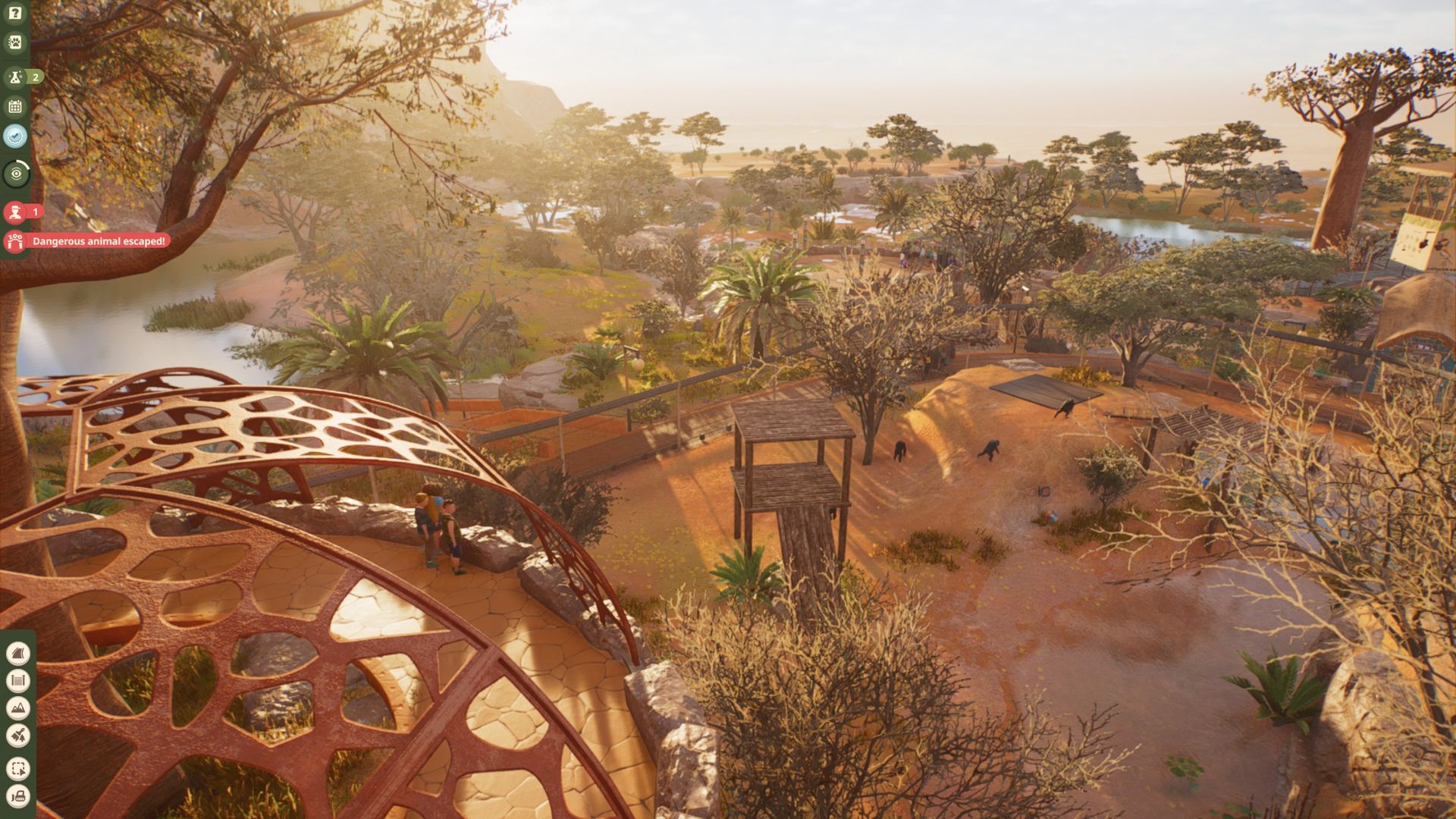
Planet Zoo 2 is the sequel to 2020’s zoo-building management sim. And it’s crammed with more animals, scenery items, and game modes than ever, so you can really let your creativity run wild.
Building zoos is my happy place. Life is stressful, the cost of living is shocking, and politics is so absurd I often feel like I’m being doped with increasing levels of satire to make the world’s first irony-immune man. Playing games like Planet Zoo 2 lets me spend time in a simpler world, where I can spend five hours tweaking the placement of ferns and rocks to make simulated siamangs happy.
As a result, I’ve spent a lot of time playing the original Planet Zoo. More than a lot, actually. Over 1,100 hours. That’s more than 45 days straight — a fact that makes me feel slightly queasy about my priorities in life. I’ve spent more time experiencing its highs and dealing with its limitations than I’ve spent with my extended family. So, naturally, as soon as I heard Planet Zoo 2 was in development, I knew I had to be the person to put it through its paces.
With the addition of aquariums, aviaries, wildlife reserves and more besides, I couldn’t wait to get my teeth into the new game and see what it was capable of. Even if it meant jettisoning a thousand hours of work, binning my old zoo and starting building from scratch, I was eager to see how all the new tools and content upgraded play. So are the two games birds of a feather, or is Planet Zoo 2 of a different stripe entirely?
Wings, fins and fur
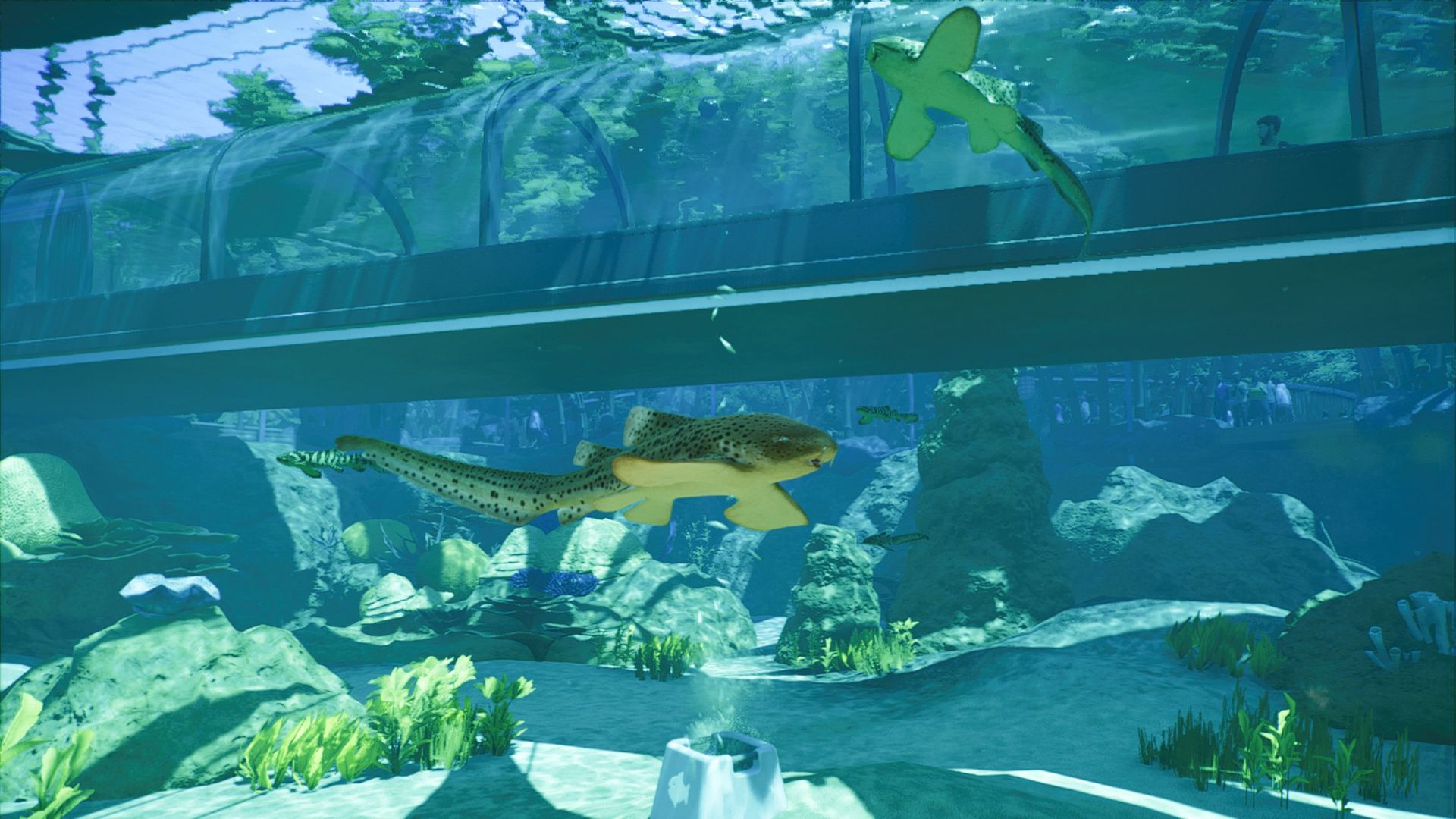
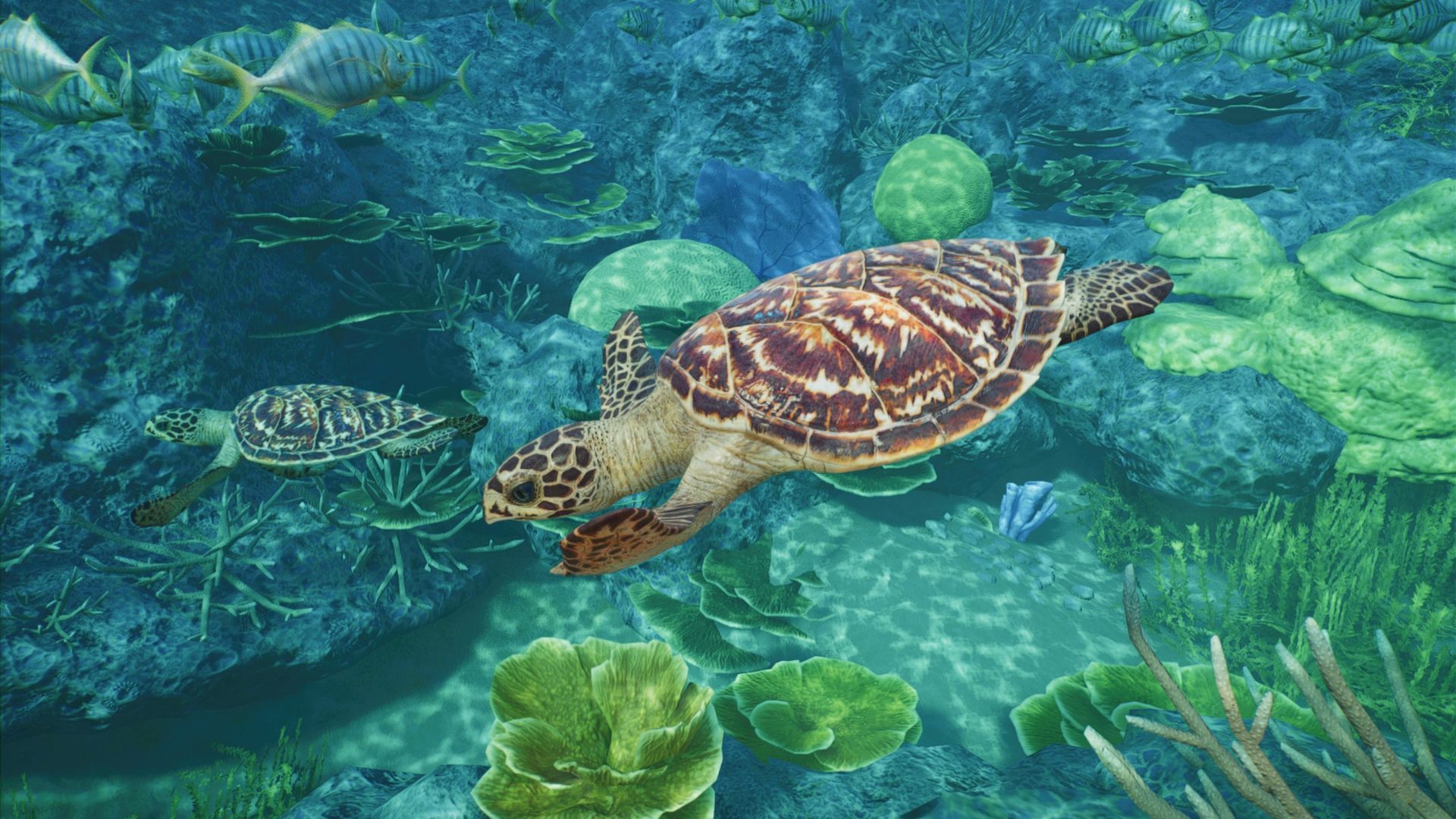
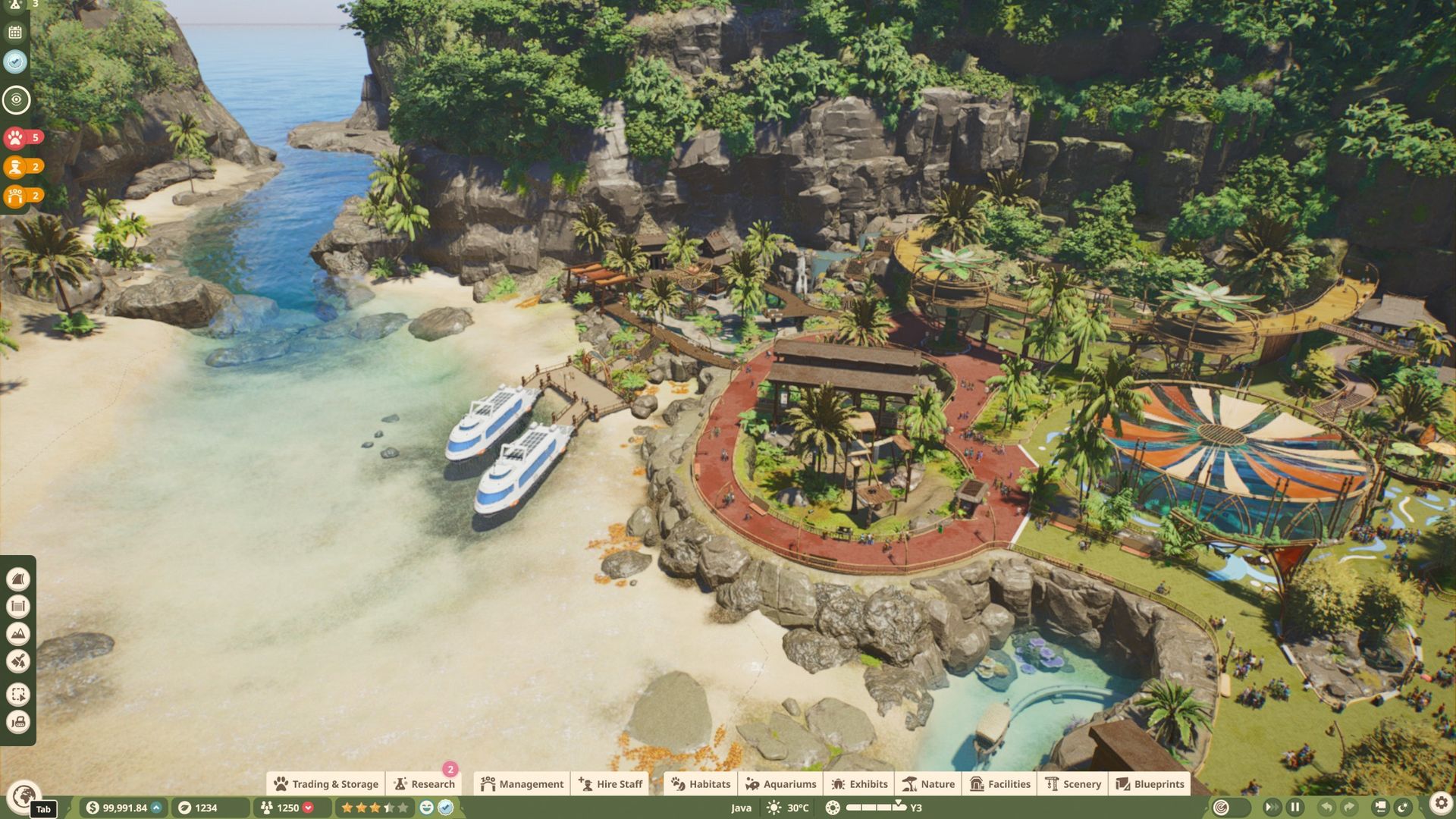
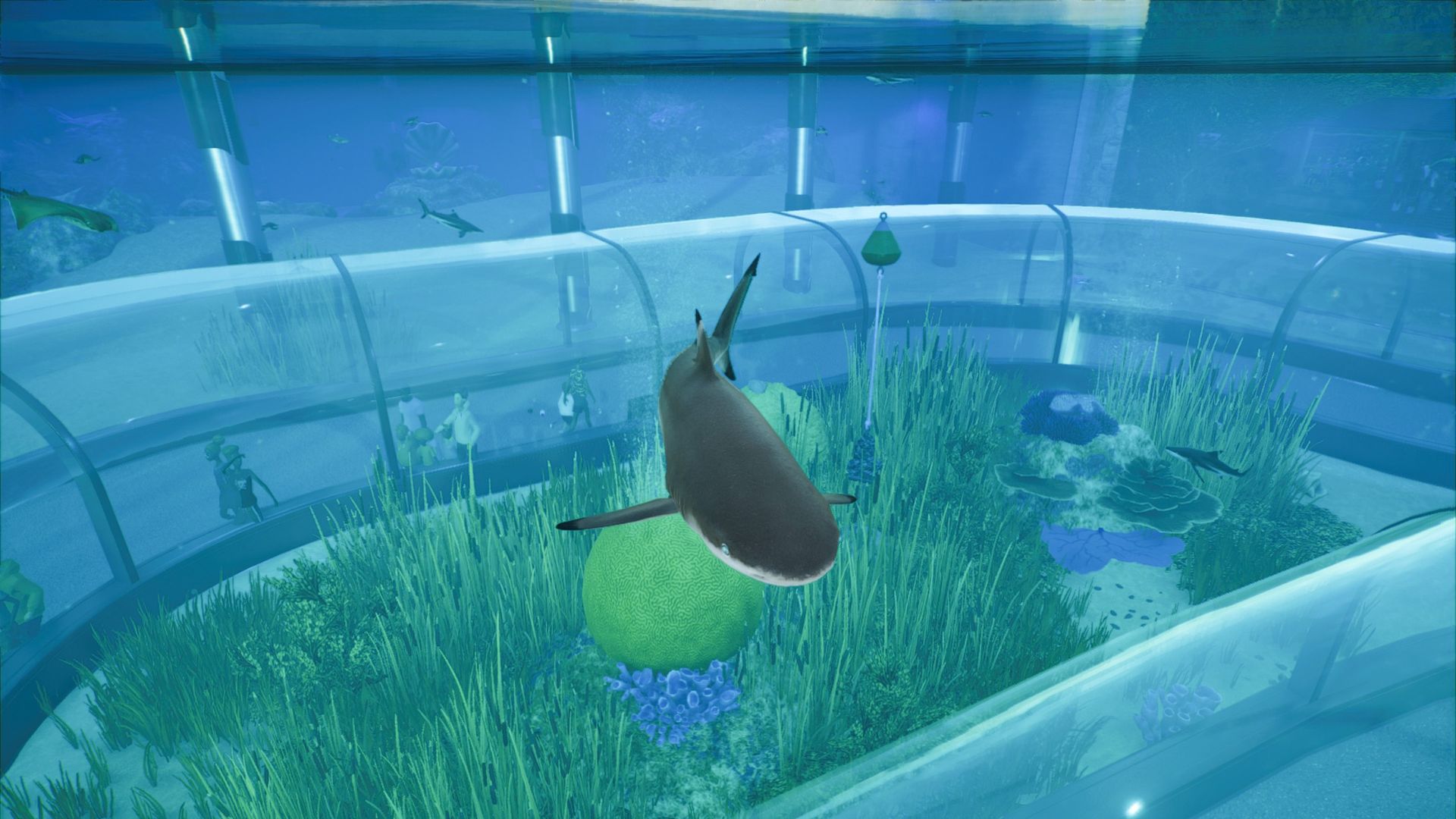
Without a doubt, aquariums are my favorite new feature. Not only can you add a fantastic variety of undersea beasties, but you can also decorate tanks with rich-looking reefs, with everything from fronds of seaweed to brightly colored corals.
As a bit (okay, a lot) of a Planet Zoo nerd, when Planet Zoo 2 was announced, I had plenty of things on my mental wishlist of upgrades I’d like to see. But top of my list were the addition of both flying birds and fish, two types of critters that felt conspicuous in their absence from the huge roster of DLCs released for the original game. So honestly, it was pretty pleasing to see both of these kinds of exhibits included when previews of the game dropped.
Flat out my favorite addition has been aquariums. These new piscine enclosures are as pretty as a picture. Aquariums feel really versatile, whether you want huge open-air tanks or to build a wall of fish into your restaurant. Walkthrough tunnels make creating immersive exhibits a breeze, and the need to filter habitats separately depending on whether they require fresh, brackish, or salty water adds an extra layer of — excuse the pun — depth.
Underwater decorations also look fantastic, allowing you to create really richly colored coral reefs and rafts of seaweed and grasses. But naturally, the animals in Planet Zoo are the stars of the show, and there’s a huge variety of sea life on offer to populate your tanks, whether you’re looking for sharks, rays, turtles or schools of fish. Wisely, Frontier has steered away from including many sea mammals like whales and dolphins — a sensible decision in light of the increasing attention that’s been paid to the ethics of keeping highly intelligent, social mammals in small tanks — but the game does include manatees, and there’s still huge potential here for semi-aquatic mammals like seals and walruses.
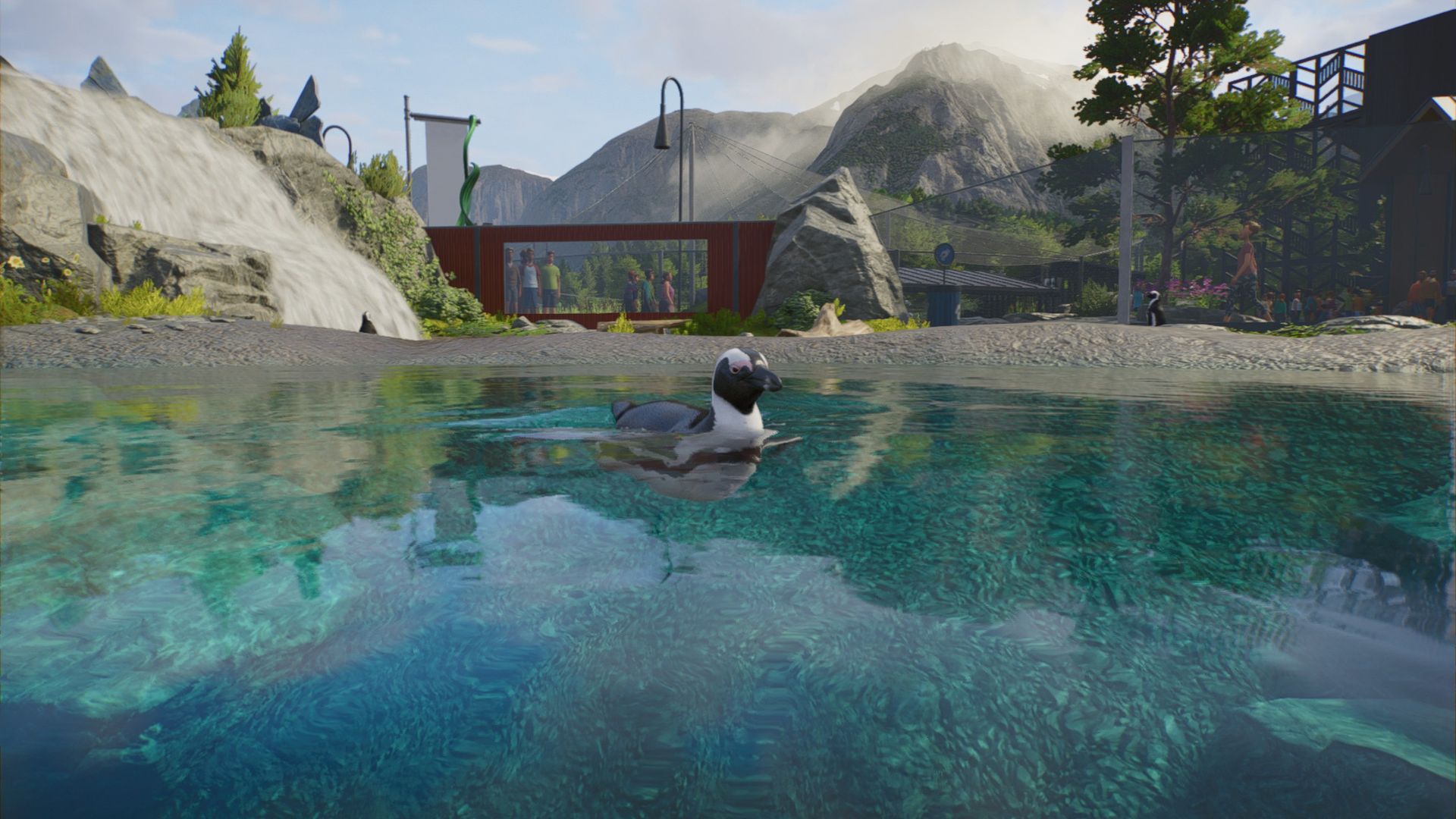
Leading up to Planet Zoo 2’s release, I was particularly excited about the addition of flying birds, as this adds a whole new dimension to your habitats compared to flightless fowl like ostriches and emus. While aviaries — essentially roof support poles and netting sitting over a classic habitat — don’t feel quite as fresh an experience as creating aquariums, I can still see how I’ll be able to use them to create stunning enclosures. And the variety of feathered friends already on offer is decent, adding everything from toucans to brightly colored long-tailed parakeets.
In fact, animals in general have had a definite glow-up in Planet Zoo 2. Not only have the earliest, lower-definition critters from the base game, like lions and African elephants, received new meshes to bring them in line with sleeker-looking critters from later expansion packs, but fauna in general looks stunning in this game.
There’s also a really solid variety of animals on offer at launch, from gila monsters to giant pandas. Don’t get me wrong: some of my personal favorites from the original game and expansions still aren’t here. Frankly, any zoo that doesn’t have fennec foxes in it is not a zoo I want to spend time in. But all the classics are here, with just enough funky additions — Goodfellow’s tree-kangaroo, anyone? — that I’m already pretty jazzed about additions that might be coming up with future updates.
All told, the variety offered by Planet Zoo 2 makes creating diverse, vibrant zoos feel easier than ever.
Management material
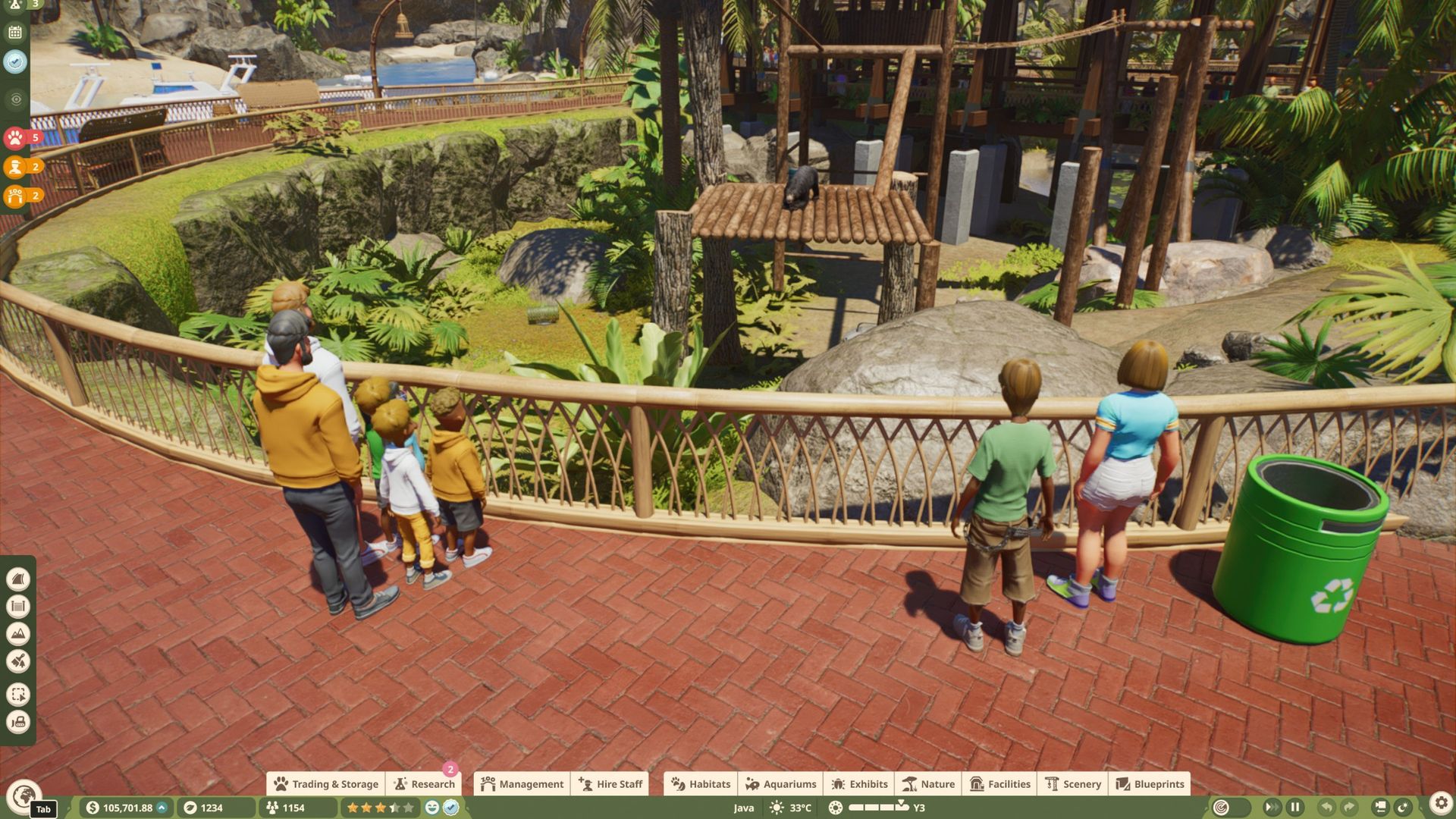
Given that Frontier Developments has launched two more park management games — Planet Coaster 2 and Jurassic World Evolution 3 — in the almost seven years since the OG Planet Zoo’s release, its core gameplay loop has inevitably evolved.
First off, career mode feels the most well-rounded it’s been in a Planet game to date. While you’ve always been able to dip in and out of individual missions on the map to complete objectives and pick up bronze, silver, and gold medals, the progression between them feels increasingly organic.
Functioning as an extended tutorial, career mode leads you through a variety of maps and scenarios throughout the world. As you complete bronze medals at each zoo, you’ll learn new mechanisms and unlock new accreditation tiers, in turn granting you access to higher tiers of animals. While this does mean your progression is somewhat locked to missions, the non-linear connection between maps made me feel much freer to pop in and out of maps than past games.
A big part of this is down to the addition of wildlife reserves. Releasing animals was a relatively shallow mechanic in Planet Zoo — enabling you to offload unneeded creatures in return for dollars or Conservation Points — in its sequel, this has been spun out into a sub-game in its own right.
Wildlife reserves’ core gameplay loop is pretty straightforward. When you arrive in a new reserve, you’ll create ecosystems for released animals by painting one in the landscape, clearing any invasive plant species, and balancing the terrain and plant requirements. Once it’s ready, you’ll be required to release animals from your zoos of the compatible type, balancing the ecosystem, and place research items like camera traps and acoustic monitors to unlock higher levels of research in your zoos.
I’ll be honest here: wildlife reserves are the area that I feel both sound like the most transformative on paper and yet haven’t fully clicked for me in practice. Part of this is because they rely heavily on my least favorite tool: the terrain painter — more on that shortly.
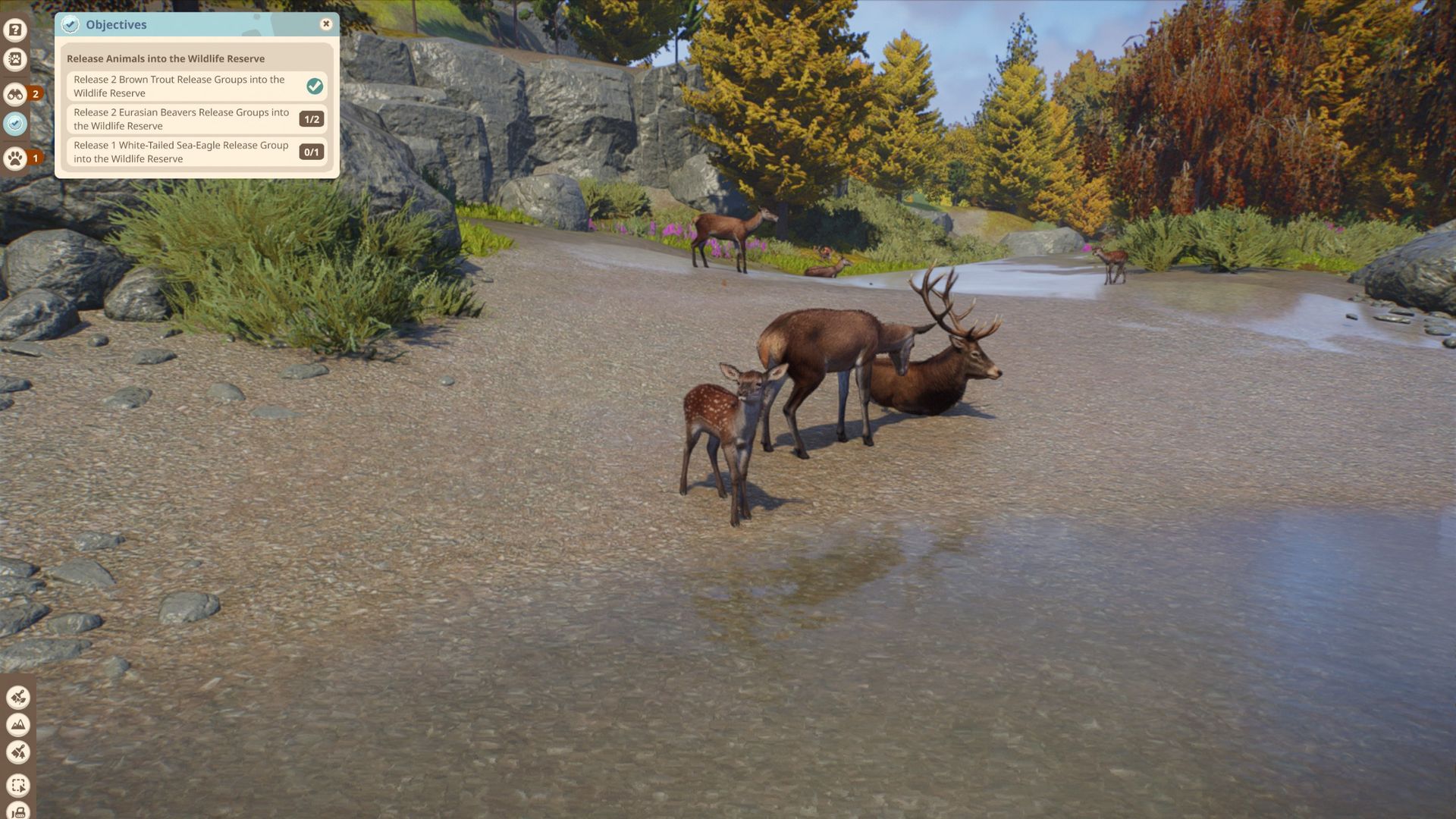
But it’s also just because these mechanics feel relatively shallow. These reserves don’t really require much ongoing management, and given there’s not much more detailed interplay among the flora and fauna once it’s placed, you can basically just set and forget these areas. As a result, I often found myself just rushing to establish ecosystems and dump the required animals in them so I could return to meatier zoo management. I’m hoping that the more I play with them, the more I’ll find to love about these freer locations, but so far they’ve stood out the least to me.
One other factor that's occasionally caused me slight discomfort is the presence of bugs. No, I'm not talking about those tarantula exhibits: at release, there have definitely been some odd issues creeping in.
I've encountered nothing game-breaking, just slightly hinky behavior here and there. At one point, items I was meticulously placing using the advanced move tools would randomly jump to a different position once I clicked place. Meanwhile, I've experienced several well-documented issues where animals ghost through their bars or get boxed up en masse inside their habitats for no clear reason. Fair play to Frontier Developments, though: they promised to patch these issues pretty quickly and, at the time of publishing, I think all of these issues have been fixed.
If you're wanting a freer experience than career mode can offer, Planet Zoo 2 still has all the other game modes you loved from the original. Franchise mode lets you focus on building your global zoo network from scratch as always, adding the ability to create your own wildlife reserves to help you feel like you’re really contributing to global conservation.
But hands-down my favorite gameplay mode is still Sandbox. I’m a bit prone to hyperfixating on small details — I know: the dude with 1,100 hours in the game is a bit obsessive. You don’t say. And that’s why I love this mode. Being able to concentrate on tweaking every last detail and focusing on building the most realistic zoo I can without needing to sweat about profitability or management just speaks to the creative part of my brain.
And, on that front, Planet Zoo 2 is better than ever.
Build baby, build
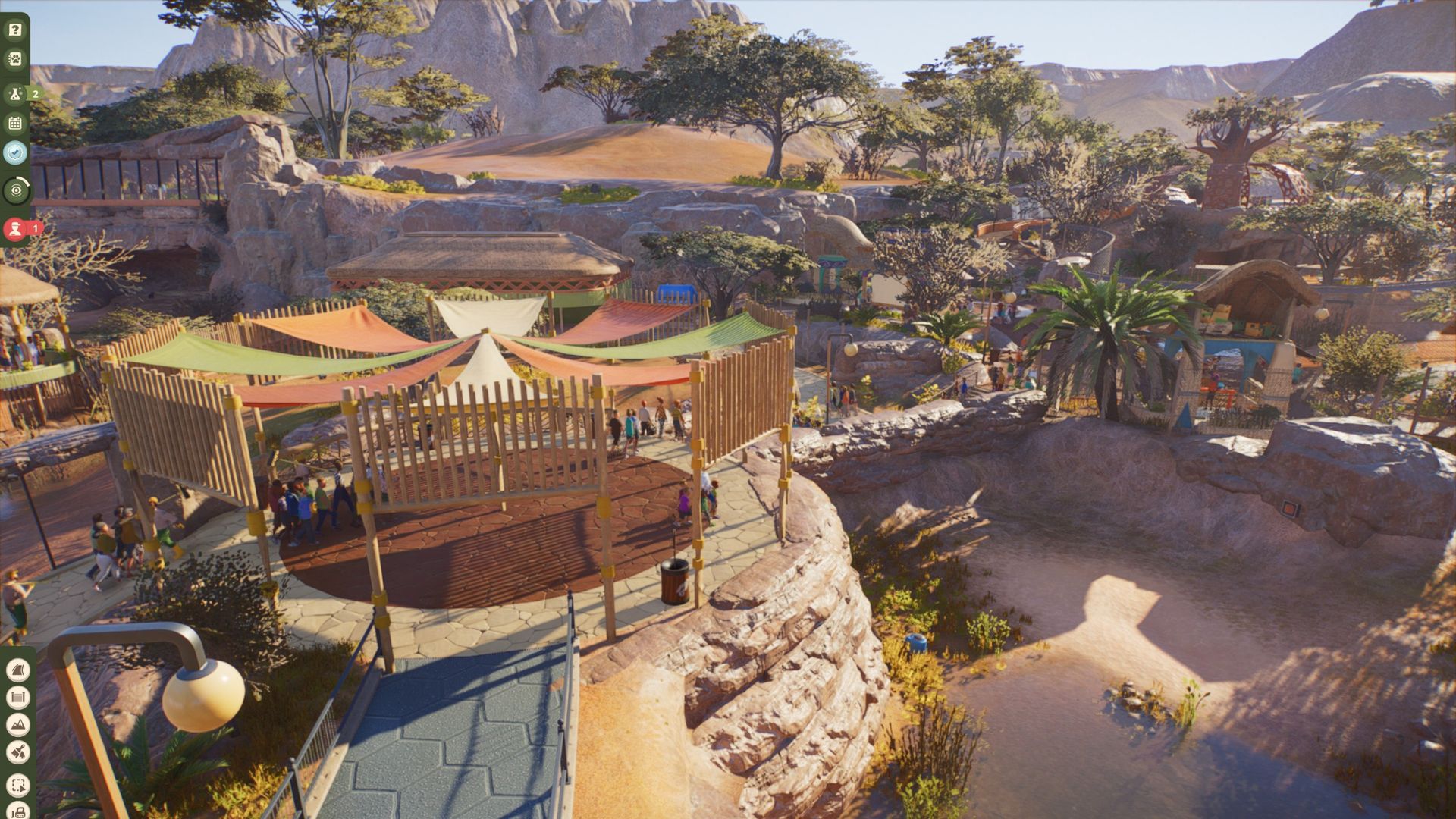
Given I’m talking about a game crammed with gorgeous wildlife, brand new habitats and new game modes, I’ll admit this makes me sound tiresomely dull. But honestly, what’s gotten me most excited about Planet Zoo 2 is the part that should be the most boring: logistics upgrades.
Rather than management sims, I’ve always felt like the Planet games are fantastically creative park design tools with a fun game on the side. And these tools have been refined across the board.
Let’s start with the placement tools. Not gonna lie, on release the placement tools in Planet Zoo were so rigid I can honestly understand if many people rarely dug into creating detailed scenery. Fortunately, these have been significantly improved — they feel more fluid, while the scale tools from Planet Coaster 2 and mirroring tools have been added, giving each decorative item significantly more versatility and making it much easier to create organic-looking areas like rockfaces.
Frustrating memories of trying to select scenery items in Planet Zoo — with their utterly random-seeming hitboxes — still haunt me to this day, particularly as deselecting items felt super awkward. In its sequel, these tools have been overhauled, not only making it easier to select and deselect items even on controller but also providing a range of toggles that allow you to restrict selection to certain types of objects, from nature objects to pathing.
While creating pathing used to involve an exasperating degree of trial and error in the original, pathing tools have had significant improvements here. Alongside the original’s straight and curved pathing options, upgrades from Planet Coaster 2 and the Jurassic World Evolution series have been introduced, like stamp and draw tools. This makes it trivial to introduce more organic-looking paths than ever and even super-precise circular courtyards and viewing areas.
All of these features contribute to making buildings and decorative items feel far easier and more fluid. But it’s not only placing man-made structures that has been improved. I’d argue that one of the hardest areas of creating your dream zoo in Planet Zoo used to be making natural scenery look organic. A significant proportion of that monumental playtime I clocked in the first game came from meticulously placing bushes piece by piece to make scenery look suitably wild.
Fortunately, Frontier has introduced the scenery brushes first created for Planet Coaster 2 into this game, enabling you to quickly paint scenery across your landscape. Not only does it come with a wide array of pre-created options, but you can also make up your own using any combination of scenery you’d like. While the end result can be slightly random-looking and the brushes still don’t get tight enough for creating really dense-looking foliage, this massively speeds up initial placement and allows you to then manually shift and complement the items for significantly faster decoration.
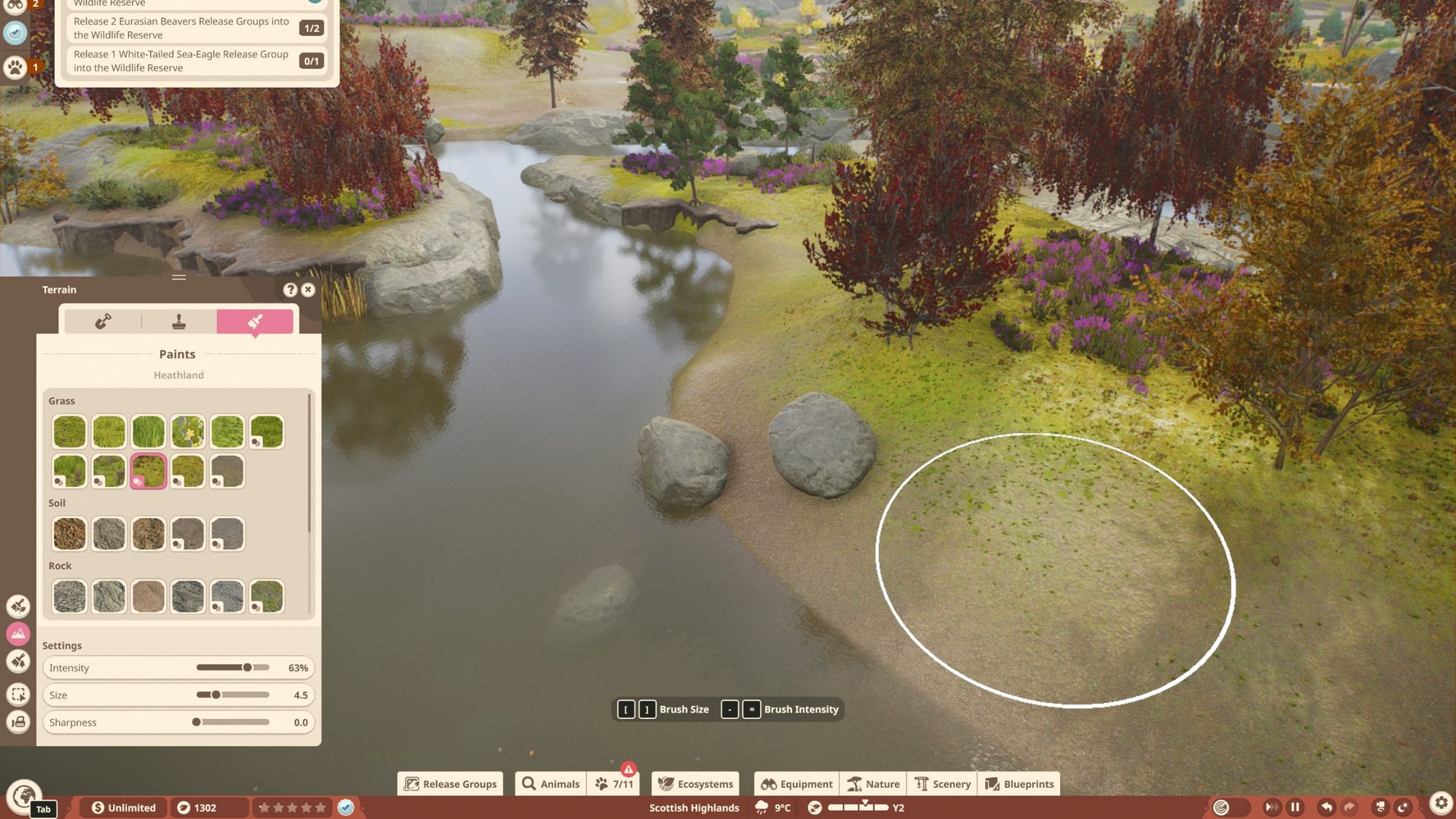
Similarly, terrain brushes have also had loads of new options added, with attract, repel, and curl brushes adding good variety to the existing toolset available. Terrain painting also comes with a significantly wider array of options, with not only lots of sub-terrain types — such as wild grass, long grass, forest floor or scree — but also brush presets that blend combos of the above.
Sadly, these terrain painting tools are the ones that I feel most lukewarm about. While they should add an enormous amount of extra variety to your landscapes, in practice I found them quite hard to blend subtly, with the intensity slider never quite going low enough to reduce hard borders between terrain types. You can achieve a similar effect by rapidly clicking to feather the brushes, but this is one of the few areas where I feel the tools at your disposal could do with some more refining.
Still, though, the impact of the tool and brush improvements has made the game feel far more fluid in action. They’re all tiny QoL upgrades in isolation, but they’re huge in aggregate. It takes Planet Zoo from a game that’s almost notoriously fiddly and rigid to something that feels more approachable for people who don’t have 1,000 hours to learn all of its tricks.
Should you play Planet Zoo 2?
Play it if…
You want a whole new world of aquatic and avian critters
Aquariums and aviaries add a whole host of flexible new habitats to bring your zoos to life. Watching turtles and toucans explore their new homes is still a magical experience.
You want the best park design tools to date
Honestly, I can’t think of a single clunky tool from the OG Planet Zoo that hasn’t had a QoL improvement here. They’re more usable, flexible, and creative than ever before.
Don’t play it if…
You want to fill a quick 15 minutes
Preset buildings make playing Planet Zoo 2 much quicker, but creating things from scratch can take a long time. If you want to design your own zoo piece by piece, be prepared to invest some serious time.
You want a whole new game
Planet Zoo 2 builds on its predecessor, so it’s more evolution than revolution. You’ll see some duplicate items and animals, but the range is still staggering, feeling much larger than in the original.
Accessibility features
There’s a small range of accessibility features available here. For those with visual impairments, you can scale the in-game font from 60% to 100% and the UI from 70% to 100%. Meanwhile, Planet Zoo 2 caters to most forms of color blindness, allowing you to change the color of subtitles, as well as the positive, warning, and negative UI feedback colors.
How I reviewed Planet Zoo 2
Given its lengthy career mode and how long it can take to build custom enclosures, I wanted to make sure I had a broad experience of the game, so I played Planet Zoo 2 for over 75 hours. While I was reviewing the PC version, I made sure to try it out on a variety of devices, including my desktop gaming PC, the Asus ProArt P16 RTX Spark, and my Steam Deck. I also tried playing it with the SteelSeries Aeon Pro controller to ensure it was as playable on controller as it is on mouse and keyboard.
When in-game, I tried to test out as wide a variety of content as possible. I played a significant chunk of the campaign, started several franchise zoos, and began building my own zoo in sandbox mode. I built aquariums, aviaries, and traditional habitats, as well as other scenery items. And I completed multiple research levels in different wildlife reserves.
As for my own experience, not only do I have that ludicrous 1,100-hour playtime in the original Planet Zoo game, but I’ve been playing management sim games ever since the OG, Theme Park, back in 1994. I’ve been gaming across a wide variety of platforms for at least 35 years and now play principally on my PC, Steam Deck, Nintendo Switch 2, and Xbox Series X.
- First reviewed: October 2026


