
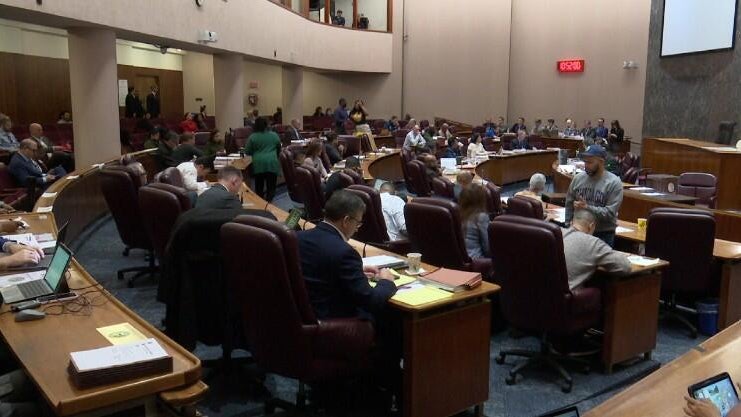
Mayor Brandon Johnson's proposed 2027 budget faced tough scrutiny from aldermen on Monday on the first day of City Council budget hearings.
The mayor's $17.6 billion spending plan would eliminate an $882 million budget shortfall in part by bringing back the corporate head tax he tried and failed to pass in last year's budget. The plan would charge companies with 125 or more full-time employees $25 per worker per month.
As Johnson's budget team laid out the spending plan for the City Council Budget Committee on Monday and took questions on the mayor's priorities and agenda, many alders signaled that this year's budget season could go down to the wire as they face a year-end deadline to adopt a 2027 budget.
Those among the 29-member opposition bloc that passed their own 2026 budget plan over the mayor's objections last year dug in their heels against his corporate head tax proposal, which they've said is dead on arrival.
"Why is $114 million of your budget built on a tax that the majority has already rejected and has indicated very clearly it plans to reject again?" Ald. Brendan Reilly (42nd) asked Johnson's budget team.
"It's included because that is what we've heard from the public. Through every interaction we've had with them, they've said resoundingly they want to see that that businesses pay their fair share," acting Budget Director Jonathan Ernst said.
Even before Johnson presented his budget address last week, his critics on the City Council warned him not to include a head tax in his budget again, arguing it would hurt job growth and discourage companies from coming to Chicago.
"Many of my colleagues were shocked to see the head tax in the mayor's budget address and his initial budget. It's obviously dead on arrival. Twenty-nine of us told us him on the front end to try to save that bit of political theater. That piece of it is obviously not going anywhere," Ald. Bill Conway (34th) told reporters on Monday.
In his budget plan, Johnson also is looking to increase revenue with new or increased taxes on sports betting, delivery services, and the tax on companies and people leasing property, cloud computing services, digital software, and more.
But some alders want to know where Johnson will cut spending as federal support for the city's budget dries up.
"I asked for a list of the city departments that would be seeing a reduction in their spending this year, and the answer is that there are none," Reilly told reporters.
The mayor's plan did draw out supporters ahead of the meeting, some who say his budget is necessary to pay for police misconduct settlement costs. The mayor wants to borrow $480 million over two years to cover the costs of such settlements, but some alders have questioned adding onto the city's already massive pile of debt.
The mayor's supporters argue that settling cases sooner would compensate survivors who waited years while also limiting legal expenses without cutting community services. They say the figure includes $260 million for cases involving former Chicago police Detective Reynaldo Guevara, who has been linked to dozens of wrongful convictions.
Dion McGill, with the 7th Police District Council, says the city's responsibility goes further.
"We owe the survivors compensation, and not just compensation, support and repair," he said.
Budget hearings this week continue through Thursday, followed by additional hearings after Election Day next week.
The City Council must approve a budget plan by the end of the year.


